Buy ahorarepublicas.eu ?
We are moving the project
ahorarepublicas.eu .
Are you interested in purchasing the domain
ahorarepublicas.eu ?
domain@kv-gmbh.de · 0541-91531010
Buy ahorarepublicas.eu ?
What does "dunno" mean?
"Dunno" is a colloquial contraction of "don't know." It is often used in informal speech or text to indicate uncertainty or lack of knowledge about a particular topic. It is a casual way of saying that one does not have the answer to a question or is unsure about something. **
When do you use "dont" in French?
"Dont" is used in French to indicate possession or to replace the preposition "de" followed by a noun. It is used when the noun being replaced is the object of the verb in the relative clause. For example, "La fille dont j'ai parlé" (The girl I talked about) or "Le livre dont tu as besoin" (The book you need). **


Similar search terms for Dunno Dont know
Top-Angebote
Products related to Dunno Dont know:
-
Little, Brown Talking to Strangers: What We Should Know about the People We Don't Know by Malcolm GladwellTalking to Strangers How did Fidel Castro fool the CIA for a generation? Why did Neville Chamberlain think he could trust Adolf Hitler? Why are campus sexual assaults on the rise? Do television sitcoms teach us something about the way we relate to each other that isn't true? While tackling these questions, Malcolm Gladwell was not solely writing a book for the page. He was also producing for the ear. In the audiobook version of Talking to Strangers, you'll hear the voices of people he interviewed--scientists, criminologists, military psychologists. Court transcripts are brought to life with re-enactments. You actually hear the contentious arrest of Sandra Bland by the side of the road in Texas. As Gladwell revisits the deceptions of Bernie Madoff, the trial of Amanda Knox, and the suicide of Sylvia Plath, you hear directly from many of the players in these real-life tragedies. There's even a theme song - Janelle Monae's "Hell You Talmbout." Something is very wrong, Gladwell argues, with the tools and strategies we use to make sense of people we don't know. And because we don't know how to talk to strangers, we are inviting conflict and misunderstanding in ways that have a profound effect on our lives and our world.6,99 £*Shipping: 2,99 £Secure redirect to the provider
-
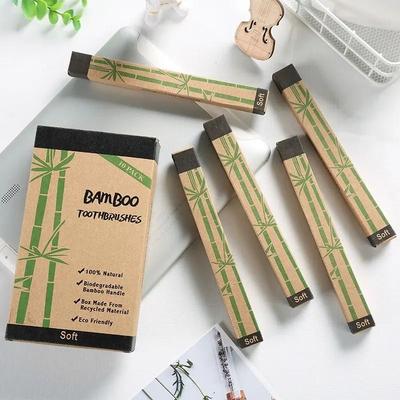
Uplift Essentials Natural Bamboo Eco Friendly Toothbrush 10 Piece Sustainable Family Pack Natural Bamboo Eco Friendly Toothbrush 10 Piece Sustainable Family PackTransition to a greener routine with this Natural Bamboo Toothbrush Set, a premium collection of bamboo products designed to reduce environmental impact without compromising on performance. Each handle is crafted from 100% sustainable bamboo,...37,97 $*Shipping: 0,00 $Secure redirect to the provider
-
HARPERCOLLINS Lifespan: Why We Age and Why We Dont Have ToLifespan - Why We Age and Why We Dont Have To Description In this paradigm-shifting book from acclaimed Harvard Medical School doctor and one of TIME magazine's 100 most influential people on earth; Dr. David Sinclair reveals that everything we think we know about ageing is wrong; and shares the surprising; scientifically-proven methods that can help readers live younger; longer. For decades; the medical community has looked to a variety of reasons for why we age; and the consensus is that no one dies of old age; they die of age-related diseases. That's because ageing is not a disease - it is inevitable. But what if everything you think you know about ageing is wrong?What if ageing is a disease? And that disease is curable. In LIFESPAN; Dr. David Sinclair; one of the world's foremost authorities on genetics and ageing; argues just that. He has dedicated his life's work to chasing more than a longer lifespan - he wants to enable people to live longer; healthier; and disease-free well into our hundreds. In this book; he reveals a bold new theory of ageing; one that pinpoints a root cause of ageing that lies in an ancient genetic survival circuit. This genetic trick - a circuit designed to halt reproduction in order to repair damage to the genome -has enabled earth's early microcosms to survive and evolve into more advanced organisms. But this same survival circuit is the reason we age: as genetic damage accumulates over our lifespans from UV rays; environmental toxins; and unhealthy diets; our genome is overwhelmed; causing gray hair; wrinkles; achy joints; heart issues; dementia; and; ultimately; death. But genes aren't our destiny; we have more control over them than we've been taught to believe. We can't change our DNA; but we can harness the power of the epigenome to realise the true potential of our genes. Drawing on his cutting-edge findings at the forefront of medical research; Dr. Sinclair will provide a scientifically-proven roadmap to reverse the genetic clock by activating our vitality genes; so we can live younger longer. Readers will discover how a few simple lifestyle changes - like intermittent fasting; avoiding too much animal protein; limiting sugar; avoiding x-rays; exercising with the right intensity; and even trying cold therapy - can activate our vitality genes. Dr. Sinclair ends the book with a look to the near future; exploring what the world might look like - and what will need to change - when we are all living well to 120 or more. Dr. Sinclair takes what we have long accepted as the limits of human potential and mortality and turns them into choices. THE EVOLUTION OF AGEING is destined to be the biggest book on genes; biology; and longevity of this decade.7,95 £*Shipping: 2,99 £Secure redirect to the provider
-
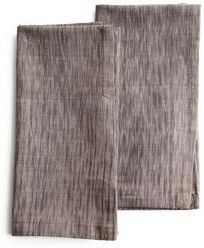
"TIMELESS Organic Cotton Napkins - Handmade, Fair Trade, Eco-Dyed by Sustainable Threads - 20""x20"" (Set of 2)"TIMELESS Collection Handwoven Organic Cotton Napkins - Set of 2 Classic and enduring, these yarn-dyed, handwoven napkins are crafted from indigenous, drought-resistant organic cotton using traditional handspun and botanical dye methods.64,00 $*Shipping: 0,00 $Secure redirect to the provider


-
Is there a difference between dont and duquel?
Yes, there is a difference between "dont" and "duquel" in French. "Dont" is used to indicate possession or relationship and is equivalent to "whose" or "of which" in English. For example, "le livre dont je t'ai parlé" means "the book that I told you about." On the other hand, "duquel" is a relative pronoun that is used to refer to a specific noun with a preposition, such as "le livre duquel je t'ai parlé" meaning "the book about which I told you." So, while both words are used to introduce relative clauses, they are used in different contexts and have different meanings. **
-
Which French relative pronouns are there: lequel or dont?
The French relative pronouns "lequel" and "dont" both serve different purposes. "Lequel" is used to refer to a specific noun and has different forms depending on the gender and number of the noun it refers to. On the other hand, "dont" is used to indicate possession or to introduce a relative clause with verbs that require the preposition "de." Both pronouns are important for constructing complex sentences and adding specificity to the language. **
-
What is the difference between organic and eco-friendly products?
Organic products are made from ingredients that are grown without the use of synthetic pesticides, herbicides, or fertilizers, and are often certified by a regulatory body. Eco-friendly products, on the other hand, are designed to have minimal impact on the environment throughout their entire lifecycle, from production to disposal. While organic products focus on the natural ingredients used, eco-friendly products consider the overall environmental impact of the product. In essence, organic products focus on the ingredients, while eco-friendly products focus on the entire product lifecycle. **
-
What is the difference between "dont" and "duquel" in French?
In French, "dont" and "duquel" are both relative pronouns used to introduce a clause that provides additional information about a noun. However, "dont" is used to replace "de + qui/que" and is used when the main verb requires the preposition "de." On the other hand, "duquel" is used to replace "de + lequel/laquelle/lesquels/lesquelles" and is used when the main verb requires the preposition "de" and the noun is masculine singular or plural. In summary, "dont" is used to replace "de + qui/que" and "duquel" is used to replace "de + lequel/laquelle/lesquels/lesquelles." **

Is organic sustainable?
Organic farming practices can be more sustainable than conventional methods in terms of reducing chemical inputs, promoting biodiversity, and improving soil health. However, there are challenges to the scalability and efficiency of organic farming, which can impact its overall sustainability. For example, organic farming typically requires more land and labor to produce the same amount of food as conventional methods, which can limit its ability to meet global food demand. Additionally, the transportation and distribution of organic products can have a higher environmental impact due to their shorter shelf life and the need for refrigeration. Overall, while organic farming has many sustainable benefits, there are also limitations to its long-term sustainability on a large scale. **
Which of them (de laquelle, duquel or dont) is grammatically correct?
The correct choice depends on the gender and number of the noun it refers to. "De laquelle" is used for feminine singular nouns, "duquel" is used for masculine singular nouns, and "dont" is used for both masculine and feminine singular or plural nouns. It's important to match the relative pronoun with the noun it refers to in terms of gender and number. **
Top-Angebote
Products related to Dunno Dont know:
-
Jessica Bend Dont Break 14.8mlMaximise flexibility and minimise breakage with this advanced base coat. Suitable for any nails that break easily. Ingredients: Ethyl Acetate, Butyl Acetate, Nitrocellulose, Acetyl Tributyl Citrate, Isopropyl Alcohol, Adipic Acid/Neopentyl Glycol/Trimellitic Anhydride Copolymer, Trimethylpentanediyl Dibenzoate, Aqua/Water/Eau, Acrylates Crosspolymer-4, Sucrose Acetate Isobutyrate, PEG-8/SMDI Copolymer, Tosylamide/Epoxy Resin, Dimethicone, Benzophenone-3, Trimethylsiloxysilicate, Alcohol, Argania Spinosa Kernel Oil, Polyvinyl Butyral, Citral, Magnesium Ascorbyl Phosphate, Ethylhexyl Palmitate, Alcohol Denat., Hydrolyzed Wheat Protein, Dimethyl Oxobenzo Dioxasilane, CI 26100/Red 17, CI 60725/Violet 2.21,50 £*Shipping: 2,95 £Secure redirect to the provider
-
"SHORELINE Napkins - Handmade Organic Cotton, Fair Trade, Eco-Dyed Artisan-Made by Sustainable Threads 20""x20"" (Set of 2)"SHORELINE Handwoven Organic Cotton Napkins Naturally elegant and thoughtfully crafted, the Shoreline napkins are woven from indigenous, drought-resistant organic cotton using traditional handspun yarns and botanical dyes.46,00 $*Shipping: 0,00 $Secure redirect to the provider
-
Little, Brown Talking to Strangers: What We Should Know about the People We Don't Know by Malcolm GladwellTalking to Strangers How did Fidel Castro fool the CIA for a generation? Why did Neville Chamberlain think he could trust Adolf Hitler? Why are campus sexual assaults on the rise? Do television sitcoms teach us something about the way we relate to each other that isn't true? While tackling these questions, Malcolm Gladwell was not solely writing a book for the page. He was also producing for the ear. In the audiobook version of Talking to Strangers, you'll hear the voices of people he interviewed--scientists, criminologists, military psychologists. Court transcripts are brought to life with re-enactments. You actually hear the contentious arrest of Sandra Bland by the side of the road in Texas. As Gladwell revisits the deceptions of Bernie Madoff, the trial of Amanda Knox, and the suicide of Sylvia Plath, you hear directly from many of the players in these real-life tragedies. There's even a theme song - Janelle Monae's "Hell You Talmbout." Something is very wrong, Gladwell argues, with the tools and strategies we use to make sense of people we don't know. And because we don't know how to talk to strangers, we are inviting conflict and misunderstanding in ways that have a profound effect on our lives and our world.6,99 £*Shipping: 2,99 £Secure redirect to the provider
-
Uplift Essentials Natural Bamboo Eco Friendly Toothbrush 10 Piece Sustainable Family Pack Natural Bamboo Eco Friendly Toothbrush 10 Piece Sustainable Family PackTransition to a greener routine with this Natural Bamboo Toothbrush Set, a premium collection of bamboo products designed to reduce environmental impact without compromising on performance. Each handle is crafted from 100% sustainable bamboo,...37,97 $*Shipping: 0,00 $Secure redirect to the provider
-
What does "dunno" mean?
"Dunno" is a colloquial contraction of "don't know." It is often used in informal speech or text to indicate uncertainty or lack of knowledge about a particular topic. It is a casual way of saying that one does not have the answer to a question or is unsure about something. **
-
When do you use "dont" in French?
"Dont" is used in French to indicate possession or to replace the preposition "de" followed by a noun. It is used when the noun being replaced is the object of the verb in the relative clause. For example, "La fille dont j'ai parlé" (The girl I talked about) or "Le livre dont tu as besoin" (The book you need). **
-
Is there a difference between dont and duquel?
Yes, there is a difference between "dont" and "duquel" in French. "Dont" is used to indicate possession or relationship and is equivalent to "whose" or "of which" in English. For example, "le livre dont je t'ai parlé" means "the book that I told you about." On the other hand, "duquel" is a relative pronoun that is used to refer to a specific noun with a preposition, such as "le livre duquel je t'ai parlé" meaning "the book about which I told you." So, while both words are used to introduce relative clauses, they are used in different contexts and have different meanings. **
-
Which French relative pronouns are there: lequel or dont?
The French relative pronouns "lequel" and "dont" both serve different purposes. "Lequel" is used to refer to a specific noun and has different forms depending on the gender and number of the noun it refers to. On the other hand, "dont" is used to indicate possession or to introduce a relative clause with verbs that require the preposition "de." Both pronouns are important for constructing complex sentences and adding specificity to the language. **
Similar search terms for Dunno Dont know
-
HARPERCOLLINS Lifespan: Why We Age and Why We Dont Have ToLifespan - Why We Age and Why We Dont Have To Description In this paradigm-shifting book from acclaimed Harvard Medical School doctor and one of TIME magazine's 100 most influential people on earth; Dr. David Sinclair reveals that everything we think we know about ageing is wrong; and shares the surprising; scientifically-proven methods that can help readers live younger; longer. For decades; the medical community has looked to a variety of reasons for why we age; and the consensus is that no one dies of old age; they die of age-related diseases. That's because ageing is not a disease - it is inevitable. But what if everything you think you know about ageing is wrong?What if ageing is a disease? And that disease is curable. In LIFESPAN; Dr. David Sinclair; one of the world's foremost authorities on genetics and ageing; argues just that. He has dedicated his life's work to chasing more than a longer lifespan - he wants to enable people to live longer; healthier; and disease-free well into our hundreds. In this book; he reveals a bold new theory of ageing; one that pinpoints a root cause of ageing that lies in an ancient genetic survival circuit. This genetic trick - a circuit designed to halt reproduction in order to repair damage to the genome -has enabled earth's early microcosms to survive and evolve into more advanced organisms. But this same survival circuit is the reason we age: as genetic damage accumulates over our lifespans from UV rays; environmental toxins; and unhealthy diets; our genome is overwhelmed; causing gray hair; wrinkles; achy joints; heart issues; dementia; and; ultimately; death. But genes aren't our destiny; we have more control over them than we've been taught to believe. We can't change our DNA; but we can harness the power of the epigenome to realise the true potential of our genes. Drawing on his cutting-edge findings at the forefront of medical research; Dr. Sinclair will provide a scientifically-proven roadmap to reverse the genetic clock by activating our vitality genes; so we can live younger longer. Readers will discover how a few simple lifestyle changes - like intermittent fasting; avoiding too much animal protein; limiting sugar; avoiding x-rays; exercising with the right intensity; and even trying cold therapy - can activate our vitality genes. Dr. Sinclair ends the book with a look to the near future; exploring what the world might look like - and what will need to change - when we are all living well to 120 or more. Dr. Sinclair takes what we have long accepted as the limits of human potential and mortality and turns them into choices. THE EVOLUTION OF AGEING is destined to be the biggest book on genes; biology; and longevity of this decade.7,95 £*Shipping: 2,99 £Secure redirect to the provider
-
"TIMELESS Organic Cotton Napkins - Handmade, Fair Trade, Eco-Dyed by Sustainable Threads - 20""x20"" (Set of 2)"TIMELESS Collection Handwoven Organic Cotton Napkins - Set of 2 Classic and enduring, these yarn-dyed, handwoven napkins are crafted from indigenous, drought-resistant organic cotton using traditional handspun and botanical dye methods.64,00 $*Shipping: 0,00 $Secure redirect to the provider
-
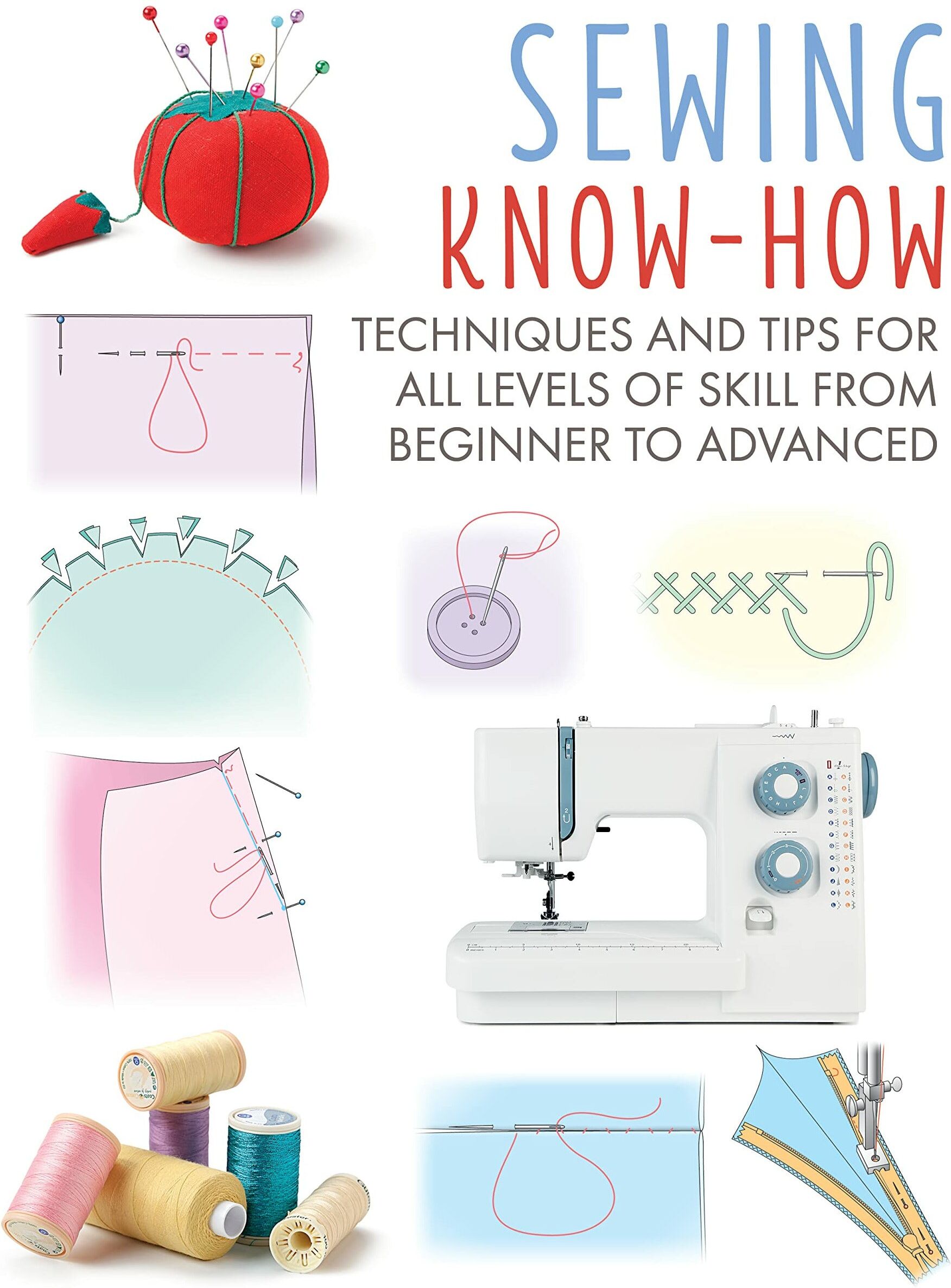
CICO Books Sewing Know-How: Techniques and tips for all levels of skill from beginner to advanced (Craft Know-How)A complete guide to the stitches, techniques and finishing touches that every sewer needs to know Whether you want to learn new techniques or brush up on the basics, this is the perfect reference guide to keep by your side as you sew. Step-by-step instructions and easy-to-follow artworks show you how to master everything from preparing a pattern and cutting out your fabric, to applying zips and making hems and darts. If you are a beginner, the first chapter takes you through all the tools you will need, including a sewing machine, pins, needles and scissors. For experienced dressmakers, tips on French seams, making buttonholes and topstitching will help you achieve a perfect finish. Whatever your skill level, this essential handbook will build your confidence and abilities, giving you all the foundations for creating beautiful projects. Sewing Know-How is a compilation of previously published favourites.8,99 £*Shipping: 2,99 £Secure redirect to the provider
-
"TIMELESS Organic Cotton Napkins - Handmade, Fair Trade, Eco-Dyed by Sustainable Threads - 20""x20"" (Set of 2)"TIMELESS Collection Handwoven Organic Cotton Napkins - Set of 2 Classic and enduring, these yarn-dyed, handwoven napkins are crafted from indigenous, drought-resistant organic cotton using traditional handspun and botanical dye methods.64,00 $*Shipping: 0,00 $Secure redirect to the provider
-
What is the difference between organic and eco-friendly products?
Organic products are made from ingredients that are grown without the use of synthetic pesticides, herbicides, or fertilizers, and are often certified by a regulatory body. Eco-friendly products, on the other hand, are designed to have minimal impact on the environment throughout their entire lifecycle, from production to disposal. While organic products focus on the natural ingredients used, eco-friendly products consider the overall environmental impact of the product. In essence, organic products focus on the ingredients, while eco-friendly products focus on the entire product lifecycle. **
-
What is the difference between "dont" and "duquel" in French?
In French, "dont" and "duquel" are both relative pronouns used to introduce a clause that provides additional information about a noun. However, "dont" is used to replace "de + qui/que" and is used when the main verb requires the preposition "de." On the other hand, "duquel" is used to replace "de + lequel/laquelle/lesquels/lesquelles" and is used when the main verb requires the preposition "de" and the noun is masculine singular or plural. In summary, "dont" is used to replace "de + qui/que" and "duquel" is used to replace "de + lequel/laquelle/lesquels/lesquelles." **
-
Is organic sustainable?
Organic farming practices can be more sustainable than conventional methods in terms of reducing chemical inputs, promoting biodiversity, and improving soil health. However, there are challenges to the scalability and efficiency of organic farming, which can impact its overall sustainability. For example, organic farming typically requires more land and labor to produce the same amount of food as conventional methods, which can limit its ability to meet global food demand. Additionally, the transportation and distribution of organic products can have a higher environmental impact due to their shorter shelf life and the need for refrigeration. Overall, while organic farming has many sustainable benefits, there are also limitations to its long-term sustainability on a large scale. **
-
Which of them (de laquelle, duquel or dont) is grammatically correct?
The correct choice depends on the gender and number of the noun it refers to. "De laquelle" is used for feminine singular nouns, "duquel" is used for masculine singular nouns, and "dont" is used for both masculine and feminine singular or plural nouns. It's important to match the relative pronoun with the noun it refers to in terms of gender and number. **
* All prices are inclusive of VAT and, if applicable, plus shipping costs. The offer information is based on the details provided by the respective shop and is updated through automated processes. Real-time updates do not occur, so deviations can occur in individual cases. ** Note: Parts of this content were created by AI.